
Payday Super: Why the Grace Period Isn’t a Free Pass
3 minute read
Since the 1st of July 2026, boards have been hearing the same reassuring phrase:
“There’s a grace period.”
The problem is that many organisations have misunderstood what that actually means.
The law didn’t introduce a pause in compliance. It introduced a different approach to enforcement. That’s an important distinction because it changes what boards should be asking management today.
The Australian Taxation Office’s Practical Compliance Guideline (PCG 2026/1) makes this clear. The Commissioner states:
“The Commissioner does not have a discretion concerning when the Payday Super reforms apply to employers.”
In other words, the obligation began on the 1st of July 2026. The transition year simply determines how the ATO will prioritise its compliance activity, not whether employers are required to comply.
What the ATO’s three-zone framework actually means
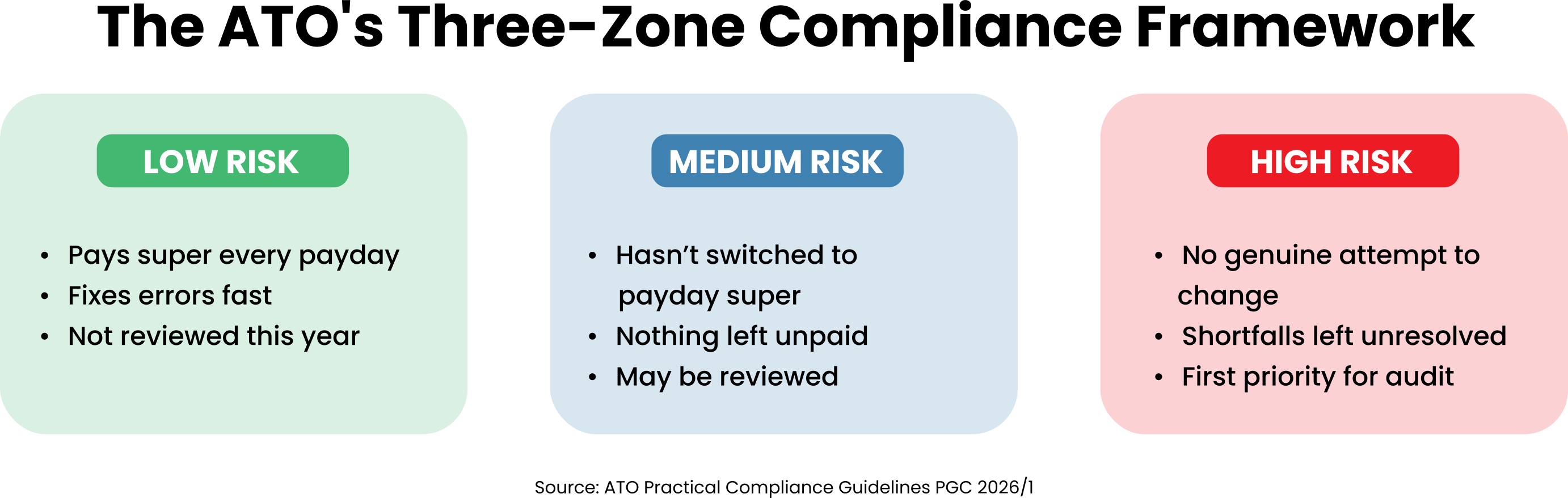
PCG 2026/1 explains how the ATO intends to allocate its compliance resources during the transition period from 1 July 2026 to 30 June 2027.
Rather than changing the law, the guideline groups employers into three compliance risk categories.
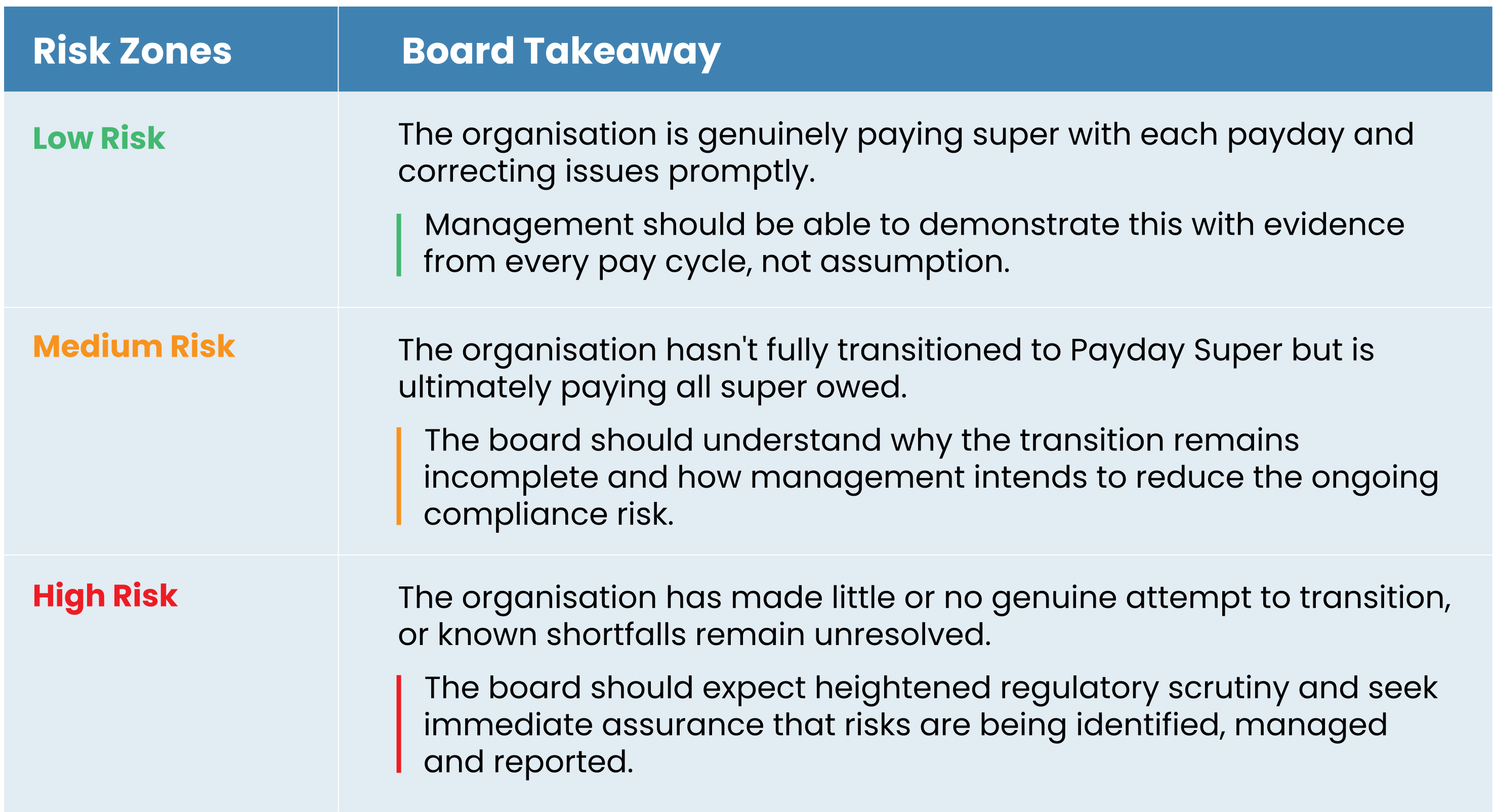
One nuance boards shouldn’t overlook: Risk isn’t assigned once for the year. It’s assessed pay run by pay run.
An organisation might operate in the low-risk zone for most payrolls, then move into medium or high risk if compliance deteriorates or issues aren’t addressed promptly.
This isn’t a compliance status you confirm once and file away. It’s an operational position that can change every payday.
Why this is a board question, not a payroll question
This is the distinction boards most often miss. Payroll controls manage the mechanics of getting super paid. Governance is the assurance that those controls are actually operating as intended, every pay cycle – and that someone can produce the evidence if asked.
Boards commonly assume compliance exists because a policy was approved and no issues have been escalated. But approving a policy is not the same as confirming it’s being executed.
The ATO applies the same governance lens to superannuation and PAYG obligations that regulators increasingly apply across payroll compliance more broadly. They’re looking for reliable processes, consistent execution and evidence that outcomes can be demonstrated, not simply documented policies.
There’s a second distinction worth making here. Evidence generated by the same team it’s meant to check on carries less weight than evidence a board should be able to rely on. It’s the same logic that makes external financial audit necessary in the first place. A payroll team saying its own numbers are right is not the same as those numbers being independently confirmed. The ATO’s shift to per-pay-cycle scrutiny doesn’t just raise the frequency with which boards need evidence. It raises who that evidence needs to come from.
The visibility gap Payday Super is designed to expose
Payday Super changes more than when super is paid.
It changes how frequently organisations need confidence that compliance is being achieved.
WageSafe has run more than 760,000 payroll audits across approximately $3 billion in payroll. Across the dataset the pattern is consistent:
The gap between policy and payslip rarely shows up in the systems built to catch it.
It shows up in the pay runs between audits. Our data reveals that businesses relying on annual or quarterly checks find that 22% of wages were incorrect by the time drift is caught. With the ATO shifting to a per-pay-cycle evaluation model from the 1st of July 2026, superannuation is now susceptible to this identical compliance visibility gap.
As our COO Rob Dryden explains:
“The ATO now checks every pay cycle. Boards should expect the same standard of evidence from their own organisation.”
Frequently Asked Questions
Is there a grace period for Payday Super?
There is no formal grace period. While the ATO will deprioritise audits for low-risk employers this year, late payments remain subject to full legal penalties in every risk zone.
What are the ATO’s three compliance risk zones?
The ATO categorises employers as low, medium or high risk based on whether they have genuinely transitioned to paying super with each payday and how promptly any issues are addressed. The framework determines audit priority, not legal obligations.
Does being low risk mean penalties don’t apply?
No.
A low-risk classification only affects the likelihood of an ATO-initiated compliance review during the transition period. It does not remove liability for late super contributions or associated Superannuation Guarantee Charges.
When does the transition period end?
The transitional compliance approach runs until 30 June 2027. From 1 July 2027, standard compliance settings apply, supported by the ATO’s real-time Single Touch Payroll and superannuation reporting capabilities.
What should boards ask management now?
Boards should ask, “Can management produce evidence that our most recent pay run met Payday Super obligations, and how quickly could that evidence be provided if the ATO requested it?”
About WageSafe
WageSafe is Australia’s first real-time wage compliance technology provider, delivering continuous wage assurance across every employee and every pay cycle. Our platform independently validates payroll outcomes against Modern Awards, Enterprise Agreements and Fair Work obligations. Learn more at wagesafe.com.au
 https://wagesafe.com.au/wp-content/uploads/2026/09/What-does-independent-mean_thumbnail-2.jpg
376
500
Libbi Jenkins
https://wagesafe.com.au/wp-content/uploads/2025/07/Wagesafe-Logo-Web-300x138.png
Libbi Jenkins2026-09-11 15:16:032026-09-24 14:30:27What Does “Independent” Actually Mean in Payroll Assurance?
https://wagesafe.com.au/wp-content/uploads/2026/09/What-does-independent-mean_thumbnail-2.jpg
376
500
Libbi Jenkins
https://wagesafe.com.au/wp-content/uploads/2025/07/Wagesafe-Logo-Web-300x138.png
Libbi Jenkins2026-09-11 15:16:032026-09-24 14:30:27What Does “Independent” Actually Mean in Payroll Assurance? https://wagesafe.com.au/wp-content/uploads/2026/08/BOOT-image_thumb.jpg
376
500
Barbara Smith
https://wagesafe.com.au/wp-content/uploads/2025/07/Wagesafe-Logo-Web-300x138.png
Barbara Smith2026-08-24 10:02:312026-09-28 13:51:32Your Enterprise Agreement Passed the BOOT Last Year. Does It Still?
https://wagesafe.com.au/wp-content/uploads/2026/08/BOOT-image_thumb.jpg
376
500
Barbara Smith
https://wagesafe.com.au/wp-content/uploads/2025/07/Wagesafe-Logo-Web-300x138.png
Barbara Smith2026-08-24 10:02:312026-09-28 13:51:32Your Enterprise Agreement Passed the BOOT Last Year. Does It Still? https://wagesafe.com.au/wp-content/uploads/2026/08/Payday_Super-outline_thumbnail.jpg
376
500
Libbi Jenkins
https://wagesafe.com.au/wp-content/uploads/2025/07/Wagesafe-Logo-Web-300x138.png
Libbi Jenkins2026-08-14 12:13:012026-09-07 16:35:06Payday Super: Why the Grace Period Isn’t a Free Pass
https://wagesafe.com.au/wp-content/uploads/2026/08/Payday_Super-outline_thumbnail.jpg
376
500
Libbi Jenkins
https://wagesafe.com.au/wp-content/uploads/2025/07/Wagesafe-Logo-Web-300x138.png
Libbi Jenkins2026-08-14 12:13:012026-09-07 16:35:06Payday Super: Why the Grace Period Isn’t a Free Pass https://wagesafe.com.au/wp-content/uploads/2026/07/Healthcare-4.jpg
608
1134
Barbara Smith
https://wagesafe.com.au/wp-content/uploads/2025/07/Wagesafe-Logo-Web-300x138.png
Barbara Smith2026-08-04 10:04:012026-09-08 08:53:37Wage Compliance for CHROs: Why Pay Accuracy Is Now a Trust, Governance and Employer Brand Issue
https://wagesafe.com.au/wp-content/uploads/2026/07/Healthcare-4.jpg
608
1134
Barbara Smith
https://wagesafe.com.au/wp-content/uploads/2025/07/Wagesafe-Logo-Web-300x138.png
Barbara Smith2026-08-04 10:04:012026-09-08 08:53:37Wage Compliance for CHROs: Why Pay Accuracy Is Now a Trust, Governance and Employer Brand Issue https://wagesafe.com.au/wp-content/uploads/2026/07/remote-worker-using-desktop-setup-bright-room-photo_mid.jpg
466
750
Barbara Smith
https://wagesafe.com.au/wp-content/uploads/2025/07/Wagesafe-Logo-Web-300x138.png
Barbara Smith2026-07-23 14:18:002026-08-27 15:11:38Wage Compliance for CFOs: What You Don’t Know Is Already on Your Balance Sheet
https://wagesafe.com.au/wp-content/uploads/2026/07/remote-worker-using-desktop-setup-bright-room-photo_mid.jpg
466
750
Barbara Smith
https://wagesafe.com.au/wp-content/uploads/2025/07/Wagesafe-Logo-Web-300x138.png
Barbara Smith2026-07-23 14:18:002026-08-27 15:11:38Wage Compliance for CFOs: What You Don’t Know Is Already on Your Balance Sheet https://wagesafe.com.au/wp-content/uploads/2026/07/WageSafe-Continuous-Check_thumb.jpg
376
500
Barbara Smith
https://wagesafe.com.au/wp-content/uploads/2025/07/Wagesafe-Logo-Web-300x138.png
Barbara Smith2026-07-09 15:46:062026-09-24 14:05:29What is Real-Time Wage Compliance?
https://wagesafe.com.au/wp-content/uploads/2026/07/WageSafe-Continuous-Check_thumb.jpg
376
500
Barbara Smith
https://wagesafe.com.au/wp-content/uploads/2025/07/Wagesafe-Logo-Web-300x138.png
Barbara Smith2026-07-09 15:46:062026-09-24 14:05:29What is Real-Time Wage Compliance? https://wagesafe.com.au/wp-content/uploads/2026/06/What-is-wage-compliance-graphic_thumb.jpg
376
500
Barbara Smith
https://wagesafe.com.au/wp-content/uploads/2025/07/Wagesafe-Logo-Web-300x138.png
Barbara Smith2026-06-18 16:55:432026-09-24 14:13:52What is Wage Compliance in Australia?
https://wagesafe.com.au/wp-content/uploads/2026/06/What-is-wage-compliance-graphic_thumb.jpg
376
500
Barbara Smith
https://wagesafe.com.au/wp-content/uploads/2025/07/Wagesafe-Logo-Web-300x138.png
Barbara Smith2026-06-18 16:55:432026-09-24 14:13:52What is Wage Compliance in Australia? https://wagesafe.com.au/wp-content/uploads/2026/05/New-Dashboard-for-blog_thumb.png
376
500
Barbara Smith
https://wagesafe.com.au/wp-content/uploads/2025/07/Wagesafe-Logo-Web-300x138.png
Barbara Smith2026-05-11 16:26:562026-09-24 14:25:36What 760,000 Payroll Audits Reveal About the Future of Wage Compliance
https://wagesafe.com.au/wp-content/uploads/2026/05/New-Dashboard-for-blog_thumb.png
376
500
Barbara Smith
https://wagesafe.com.au/wp-content/uploads/2025/07/Wagesafe-Logo-Web-300x138.png
Barbara Smith2026-05-11 16:26:562026-09-24 14:25:36What 760,000 Payroll Audits Reveal About the Future of Wage Compliance https://wagesafe.com.au/wp-content/uploads/2026/01/WageSafe-Continuous-Payroll-Compliance-.jpg
376
500
Barbara Smith
https://wagesafe.com.au/wp-content/uploads/2025/07/Wagesafe-Logo-Web-300x138.png
Barbara Smith2026-01-30 15:04:102026-07-09 16:51:59Why Continuous Payroll Compliance Is Replacing the “Annual Audit” Approach for Australian Enterprises
https://wagesafe.com.au/wp-content/uploads/2026/01/WageSafe-Continuous-Payroll-Compliance-.jpg
376
500
Barbara Smith
https://wagesafe.com.au/wp-content/uploads/2025/07/Wagesafe-Logo-Web-300x138.png
Barbara Smith2026-01-30 15:04:102026-07-09 16:51:59Why Continuous Payroll Compliance Is Replacing the “Annual Audit” Approach for Australian Enterprises https://wagesafe.com.au/wp-content/uploads/2025/12/WageSafe-Understanding-Wage-Underpayments-and-Director-Liability-in-Australia.jpg
376
500
Barbara Smith
https://wagesafe.com.au/wp-content/uploads/2025/07/Wagesafe-Logo-Web-300x138.png
Barbara Smith2025-12-09 13:17:412026-03-17 16:11:04Understanding Wage Underpayments and Director Liability in Australia
https://wagesafe.com.au/wp-content/uploads/2025/12/WageSafe-Understanding-Wage-Underpayments-and-Director-Liability-in-Australia.jpg
376
500
Barbara Smith
https://wagesafe.com.au/wp-content/uploads/2025/07/Wagesafe-Logo-Web-300x138.png
Barbara Smith2025-12-09 13:17:412026-03-17 16:11:04Understanding Wage Underpayments and Director Liability in Australia https://wagesafe.com.au/wp-content/uploads/2025/10/WageSafe-6-Reasons-Payroll-and-Compliance-Reviews-Are-Essential-for-Australian-Businesses.jpg
376
500
Barbara Smith
https://wagesafe.com.au/wp-content/uploads/2025/07/Wagesafe-Logo-Web-300x138.png
Barbara Smith2025-10-15 13:38:242026-03-17 16:15:536 Reasons Payroll and Compliance Reviews Are Essential for Australian Businesses
https://wagesafe.com.au/wp-content/uploads/2025/10/WageSafe-6-Reasons-Payroll-and-Compliance-Reviews-Are-Essential-for-Australian-Businesses.jpg
376
500
Barbara Smith
https://wagesafe.com.au/wp-content/uploads/2025/07/Wagesafe-Logo-Web-300x138.png
Barbara Smith2025-10-15 13:38:242026-03-17 16:15:536 Reasons Payroll and Compliance Reviews Are Essential for Australian Businesses https://wagesafe.com.au/wp-content/uploads/2025/09/group-business-colleagues-having-headache-while-working-laptop-trying-solve-problems-meeting.jpg
376
500
Barbara Smith
https://wagesafe.com.au/wp-content/uploads/2025/07/Wagesafe-Logo-Web-300x138.png
Barbara Smith2025-09-16 05:51:322026-03-17 16:17:31Why Payroll Compliance is now a Top Tier concern for Risk and Compliance leaders
https://wagesafe.com.au/wp-content/uploads/2025/09/group-business-colleagues-having-headache-while-working-laptop-trying-solve-problems-meeting.jpg
376
500
Barbara Smith
https://wagesafe.com.au/wp-content/uploads/2025/07/Wagesafe-Logo-Web-300x138.png
Barbara Smith2025-09-16 05:51:322026-03-17 16:17:31Why Payroll Compliance is now a Top Tier concern for Risk and Compliance leaders
