
What Does “Independent” Actually Mean in Payroll Assurance?
3 minute read
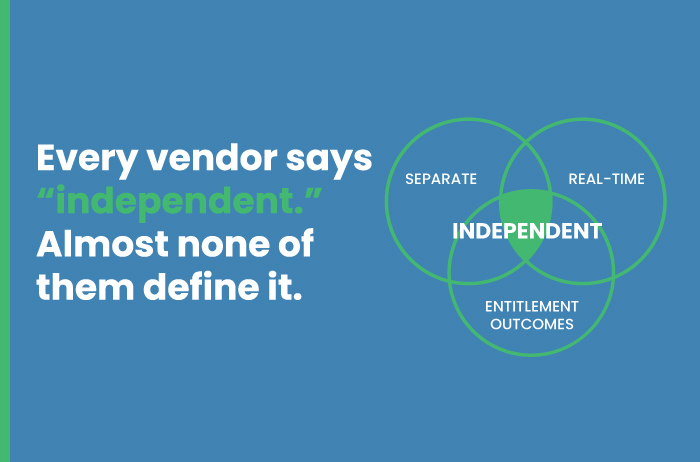
Independent payroll assurance means three things:
Separate from the system that ran the pay, tested against actual legal entitlements (not just controls), and checked in real time, not once a year.
Miss any one of the three, and it’s not independence. It just looks like it.
Every vendor in this category uses the word “independent.” Almost none of them define it.
A board relies on the word to mean one specific thing. But if every provider is free to define it differently, the word stops doing its job.
We think it’s worth being precise about. The gap between “sounds independent” and “is independent” is exactly where payroll risk hides.
The three-part test
We define independent payroll assurance as needing all three of the following, together:
- Separate from the systems that produced the pay run or generated the payroll outcomes.
- Testing legal entitlement outcomes, not just controls.
- Real-time, not point-in-time. Checked every employee, every pay cycle, not sampled once a year.
HOW THE MARKET MEASURES UP
| ENTITLEMENTS | ||||
|---|---|---|---|---|
| External Audit | ||||
| Pre-Payroll Checker | ||||
| WageSafe |
Miss any one of the three, and what’s left isn’t independence. It’s a different, weaker thing wearing the same label.
Where this breaks down in practice
External audit is the clearest example. It’s genuinely separate from the payroll system, that’s not in question.
Audit means different things to different people, it is typically designed for a sample of employees across a certain period of time. A standard audit is built to test whether payroll expense is materially correct in aggregate. It isn’t built to test whether any individual employee was paid what they were legally owed.
As Tracy Angwin states in The Payroll Blind Spot, an audit can sample ten payslips, find all ten correct, and conclude the process is sound. Meanwhile, the underlying overtime interpretation is wrong for every employee, applied so consistently that the sample never catches it.
The error surfaces years later, at a cost far higher than it would have been on day one. That’s an audit doing exactly what audit is designed to do. It was just never designed to answer the question a board actually needs answered.
Pre-payroll checkers fail differently. These are tools that sit inside the same payroll run and flag issues before the pay file is finalised.
They can genuinely test entitlement outcomes, and they can run continuously. That’s two of the three.
But because they operate inside the same system that produced the pay run, they can’t independently confirm it. A check can’t mark its own homework, however sophisticated the check is.
Two out of three still isn’t independence. It’s a near miss, and near misses are exactly what boards should be asking harder questions about, not accepting at face value.
Why the definition has to have teeth
We can only make this argument because we hold ourselves to it.
Across more than 1 million payroll audits and over $4 billion in payroll analysed, testing pay outcomes independently of the systems that produced them, we still find an error in roughly 22% of pay runs tested. Not in businesses with obviously broken processes. In organisations that believed, reasonably, that their payroll was under control.
A term this loosely applied shouldn’t be what stands between a board and confidence in its biggest regulated cost line. So it’s worth knowing exactly what you’re being told when someone uses it.
The question worth asking
Next time a provider, including us, describes a solution as “independent,” it’s worth asking which of the three they actually mean. Separate from what, tested against what, and how often?
If the answer only covers one or two, that’s not a reason to walk away. It’s a reason to know precisely what gap you’re still carrying.
Frequently Asked Questions
What does “independent” mean in payroll assurance? It means an assurance check is separate from the system that produced the pay run, tests actual legal entitlement outcomes (not just whether controls were followed), and runs in real time rather than at a single point in time. All three conditions need to hold at once.
Is an internal or external payroll audit “independent”? An external audit is separate from the payroll system, which satisfies one of the three conditions. It tests aggregate payroll expense, not individual entitlements, and only periodically, not every pay cycle. A clean audit is not the same as confirmation of payroll assurance.
Is a pre-payroll assurance checker “independent”? Not fully. A pre-payroll checker can test entitlement outcomes and can run continuously, satisfying two of the three conditions. But because it operates inside the same system that generates the pay run, it isn’t separate from it, the same limitation as a control checking itself.
Why does “real-time” matter, rather than “point-in-time”? Because payroll risk compounds silently between checks. An interpretation error that isn’t caught until the next audit or review cycle has usually already repeated across every affected employee and every pay run in between. Real-time testing catches it at the pay cycle where it happens, not years later.
What’s the difference between a payroll audit and payroll assurance? It depends on what the audit is designed to achieve. Typically, an audit tests whether a process was followed or whether an expense is reasonable in aggregate. Payroll assurance independently tests whether each employee’s pay outcome was legally correct, continuously, regardless of whether that outcome would ever be picked up by a sample-based audit.
Why does this distinction matter for CFOs and boards specifically? Because “independent” is frequently used as shorthand for “you don’t need to check this yourself.” If the underlying check doesn’t actually meet all three conditions, that shorthand is doing more reassuring than the check itself can support, and the gap between the two is where liability quietly accumulates.
About WageSafe
WageSafe provides real-time, independent wage assurance – testing pay outcomes against the award, agreement and legislation that apply to every employee, every pay cycle. Learn more at wagesafe.com.au
 https://wagesafe.com.au/wp-content/uploads/2026/09/What-does-independent-mean_thumbnail-2.jpg
376
500
Libbi Jenkins
https://wagesafe.com.au/wp-content/uploads/2025/07/Wagesafe-Logo-Web-300x138.png
Libbi Jenkins2026-09-11 15:16:032026-09-24 14:30:27What Does “Independent” Actually Mean in Payroll Assurance?
https://wagesafe.com.au/wp-content/uploads/2026/09/What-does-independent-mean_thumbnail-2.jpg
376
500
Libbi Jenkins
https://wagesafe.com.au/wp-content/uploads/2025/07/Wagesafe-Logo-Web-300x138.png
Libbi Jenkins2026-09-11 15:16:032026-09-24 14:30:27What Does “Independent” Actually Mean in Payroll Assurance? https://wagesafe.com.au/wp-content/uploads/2026/08/BOOT-image_thumb.jpg
376
500
Barbara Smith
https://wagesafe.com.au/wp-content/uploads/2025/07/Wagesafe-Logo-Web-300x138.png
Barbara Smith2026-08-24 10:02:312026-09-28 13:51:32Your Enterprise Agreement Passed the BOOT Last Year. Does It Still?
https://wagesafe.com.au/wp-content/uploads/2026/08/BOOT-image_thumb.jpg
376
500
Barbara Smith
https://wagesafe.com.au/wp-content/uploads/2025/07/Wagesafe-Logo-Web-300x138.png
Barbara Smith2026-08-24 10:02:312026-09-28 13:51:32Your Enterprise Agreement Passed the BOOT Last Year. Does It Still? https://wagesafe.com.au/wp-content/uploads/2026/08/Payday_Super-outline_thumbnail.jpg
376
500
Libbi Jenkins
https://wagesafe.com.au/wp-content/uploads/2025/07/Wagesafe-Logo-Web-300x138.png
Libbi Jenkins2026-08-14 12:13:012026-09-07 16:35:06Payday Super: Why the Grace Period Isn’t a Free Pass
https://wagesafe.com.au/wp-content/uploads/2026/08/Payday_Super-outline_thumbnail.jpg
376
500
Libbi Jenkins
https://wagesafe.com.au/wp-content/uploads/2025/07/Wagesafe-Logo-Web-300x138.png
Libbi Jenkins2026-08-14 12:13:012026-09-07 16:35:06Payday Super: Why the Grace Period Isn’t a Free Pass https://wagesafe.com.au/wp-content/uploads/2026/07/Healthcare-4.jpg
608
1134
Barbara Smith
https://wagesafe.com.au/wp-content/uploads/2025/07/Wagesafe-Logo-Web-300x138.png
Barbara Smith2026-08-04 10:04:012026-09-08 08:53:37Wage Compliance for CHROs: Why Pay Accuracy Is Now a Trust, Governance and Employer Brand Issue
https://wagesafe.com.au/wp-content/uploads/2026/07/Healthcare-4.jpg
608
1134
Barbara Smith
https://wagesafe.com.au/wp-content/uploads/2025/07/Wagesafe-Logo-Web-300x138.png
Barbara Smith2026-08-04 10:04:012026-09-08 08:53:37Wage Compliance for CHROs: Why Pay Accuracy Is Now a Trust, Governance and Employer Brand Issue https://wagesafe.com.au/wp-content/uploads/2026/07/remote-worker-using-desktop-setup-bright-room-photo_mid.jpg
466
750
Barbara Smith
https://wagesafe.com.au/wp-content/uploads/2025/07/Wagesafe-Logo-Web-300x138.png
Barbara Smith2026-07-23 14:18:002026-08-27 15:11:38Wage Compliance for CFOs: What You Don’t Know Is Already on Your Balance Sheet
https://wagesafe.com.au/wp-content/uploads/2026/07/remote-worker-using-desktop-setup-bright-room-photo_mid.jpg
466
750
Barbara Smith
https://wagesafe.com.au/wp-content/uploads/2025/07/Wagesafe-Logo-Web-300x138.png
Barbara Smith2026-07-23 14:18:002026-08-27 15:11:38Wage Compliance for CFOs: What You Don’t Know Is Already on Your Balance Sheet https://wagesafe.com.au/wp-content/uploads/2026/07/WageSafe-Continuous-Check_thumb.jpg
376
500
Barbara Smith
https://wagesafe.com.au/wp-content/uploads/2025/07/Wagesafe-Logo-Web-300x138.png
Barbara Smith2026-07-09 15:46:062026-09-24 14:05:29What is Real-Time Wage Compliance?
https://wagesafe.com.au/wp-content/uploads/2026/07/WageSafe-Continuous-Check_thumb.jpg
376
500
Barbara Smith
https://wagesafe.com.au/wp-content/uploads/2025/07/Wagesafe-Logo-Web-300x138.png
Barbara Smith2026-07-09 15:46:062026-09-24 14:05:29What is Real-Time Wage Compliance?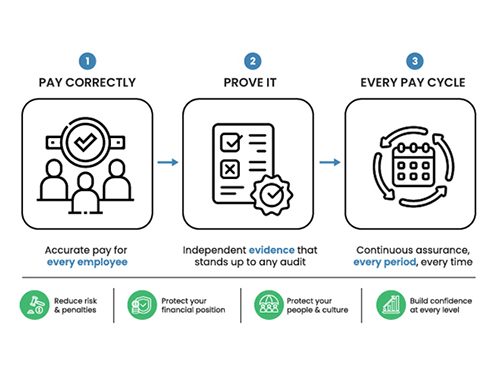 https://wagesafe.com.au/wp-content/uploads/2026/06/What-is-wage-compliance-graphic_thumb.jpg
376
500
Barbara Smith
https://wagesafe.com.au/wp-content/uploads/2025/07/Wagesafe-Logo-Web-300x138.png
Barbara Smith2026-06-18 16:55:432026-09-24 14:13:52What is Wage Compliance in Australia?
https://wagesafe.com.au/wp-content/uploads/2026/06/What-is-wage-compliance-graphic_thumb.jpg
376
500
Barbara Smith
https://wagesafe.com.au/wp-content/uploads/2025/07/Wagesafe-Logo-Web-300x138.png
Barbara Smith2026-06-18 16:55:432026-09-24 14:13:52What is Wage Compliance in Australia?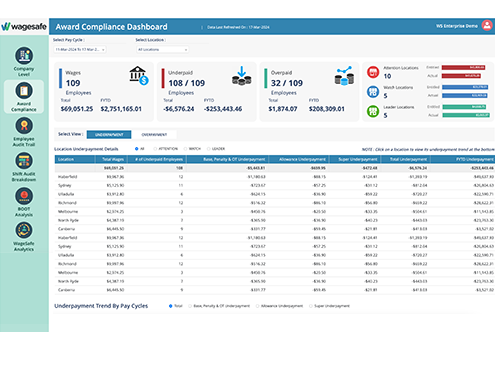 https://wagesafe.com.au/wp-content/uploads/2026/05/New-Dashboard-for-blog_thumb.png
376
500
Barbara Smith
https://wagesafe.com.au/wp-content/uploads/2025/07/Wagesafe-Logo-Web-300x138.png
Barbara Smith2026-05-11 16:26:562026-09-24 14:25:36What 760,000 Payroll Audits Reveal About the Future of Wage Compliance
https://wagesafe.com.au/wp-content/uploads/2026/05/New-Dashboard-for-blog_thumb.png
376
500
Barbara Smith
https://wagesafe.com.au/wp-content/uploads/2025/07/Wagesafe-Logo-Web-300x138.png
Barbara Smith2026-05-11 16:26:562026-09-24 14:25:36What 760,000 Payroll Audits Reveal About the Future of Wage Compliance https://wagesafe.com.au/wp-content/uploads/2026/01/WageSafe-Continuous-Payroll-Compliance-.jpg
376
500
Barbara Smith
https://wagesafe.com.au/wp-content/uploads/2025/07/Wagesafe-Logo-Web-300x138.png
Barbara Smith2026-01-30 15:04:102026-07-09 16:51:59Why Continuous Payroll Compliance Is Replacing the “Annual Audit” Approach for Australian Enterprises
https://wagesafe.com.au/wp-content/uploads/2026/01/WageSafe-Continuous-Payroll-Compliance-.jpg
376
500
Barbara Smith
https://wagesafe.com.au/wp-content/uploads/2025/07/Wagesafe-Logo-Web-300x138.png
Barbara Smith2026-01-30 15:04:102026-07-09 16:51:59Why Continuous Payroll Compliance Is Replacing the “Annual Audit” Approach for Australian Enterprises https://wagesafe.com.au/wp-content/uploads/2025/12/WageSafe-Understanding-Wage-Underpayments-and-Director-Liability-in-Australia.jpg
376
500
Barbara Smith
https://wagesafe.com.au/wp-content/uploads/2025/07/Wagesafe-Logo-Web-300x138.png
Barbara Smith2025-12-09 13:17:412026-03-17 16:11:04Understanding Wage Underpayments and Director Liability in Australia
https://wagesafe.com.au/wp-content/uploads/2025/12/WageSafe-Understanding-Wage-Underpayments-and-Director-Liability-in-Australia.jpg
376
500
Barbara Smith
https://wagesafe.com.au/wp-content/uploads/2025/07/Wagesafe-Logo-Web-300x138.png
Barbara Smith2025-12-09 13:17:412026-03-17 16:11:04Understanding Wage Underpayments and Director Liability in Australia https://wagesafe.com.au/wp-content/uploads/2025/10/WageSafe-6-Reasons-Payroll-and-Compliance-Reviews-Are-Essential-for-Australian-Businesses.jpg
376
500
Barbara Smith
https://wagesafe.com.au/wp-content/uploads/2025/07/Wagesafe-Logo-Web-300x138.png
Barbara Smith2025-10-15 13:38:242026-03-17 16:15:536 Reasons Payroll and Compliance Reviews Are Essential for Australian Businesses
https://wagesafe.com.au/wp-content/uploads/2025/10/WageSafe-6-Reasons-Payroll-and-Compliance-Reviews-Are-Essential-for-Australian-Businesses.jpg
376
500
Barbara Smith
https://wagesafe.com.au/wp-content/uploads/2025/07/Wagesafe-Logo-Web-300x138.png
Barbara Smith2025-10-15 13:38:242026-03-17 16:15:536 Reasons Payroll and Compliance Reviews Are Essential for Australian Businesses https://wagesafe.com.au/wp-content/uploads/2025/09/group-business-colleagues-having-headache-while-working-laptop-trying-solve-problems-meeting.jpg
376
500
Barbara Smith
https://wagesafe.com.au/wp-content/uploads/2025/07/Wagesafe-Logo-Web-300x138.png
Barbara Smith2025-09-16 05:51:322026-03-17 16:17:31Why Payroll Compliance is now a Top Tier concern for Risk and Compliance leaders
https://wagesafe.com.au/wp-content/uploads/2025/09/group-business-colleagues-having-headache-while-working-laptop-trying-solve-problems-meeting.jpg
376
500
Barbara Smith
https://wagesafe.com.au/wp-content/uploads/2025/07/Wagesafe-Logo-Web-300x138.png
Barbara Smith2025-09-16 05:51:322026-03-17 16:17:31Why Payroll Compliance is now a Top Tier concern for Risk and Compliance leaders