
What 760,000 Payroll Audits Reveal About the Future of Wage Compliance
2 minute read
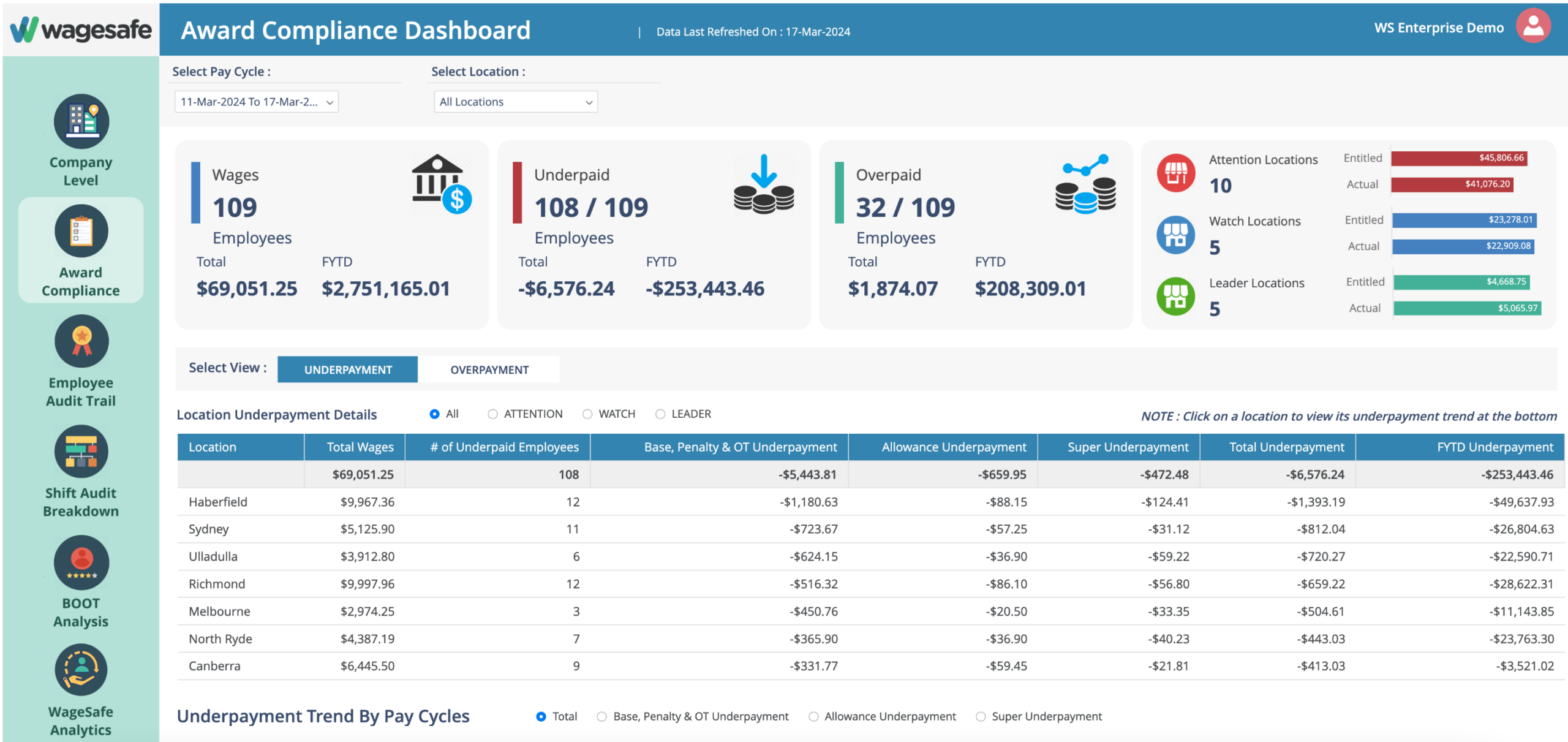
In early 2025, we set out to audit 260,000 payrolls. By FY26, that figure will exceed 500,000. The message is clear: the era of assuming payroll compliance is over.
The Question Has Changed
For years, organisations approached compliance with a relatively simple question:
“Are we compliant?”
It was a reasonable question in a world of:
- Periodic audits
- Sample testing
- Retrospective reviews
But at scale, that question starts to fall apart.
Because across hundreds of thousands of payrolls, one thing becomes clear:
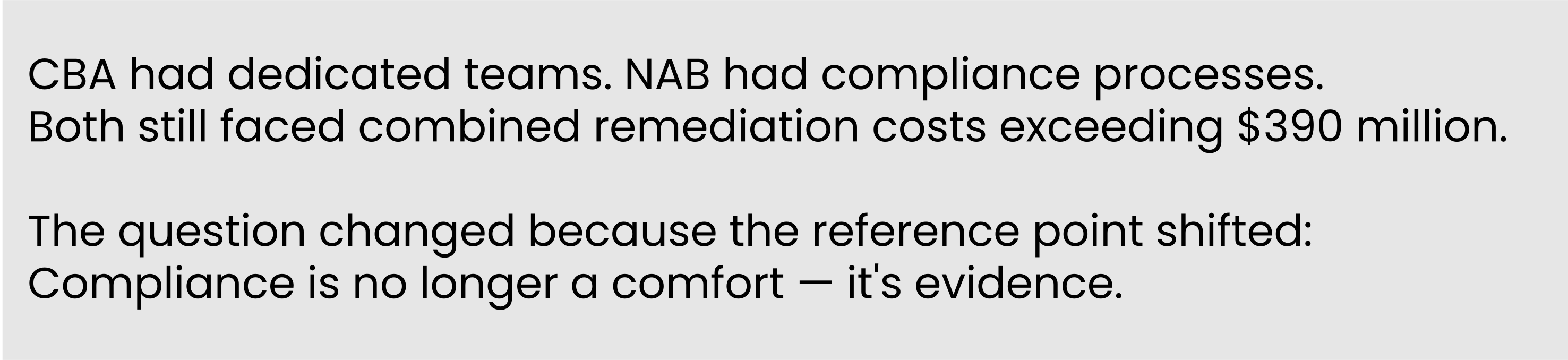
Compliance isn’t static.
What Scale Reveals
When you audit payroll at this volume, patterns emerge that aren’t visible in isolated reviews.
Errors rarely present as one-off events. They repeat.
Small misinterpretations of awards, allowances, or classifications don’t stay contained — they compound across employees, locations, and time. A single payroll system configuration error at Taronga Zoo went undetected for years, accumulating $2.6 million in underpayments affecting 902 employees.
How a Small Payroll Error Snowballs into a $2.6M Problem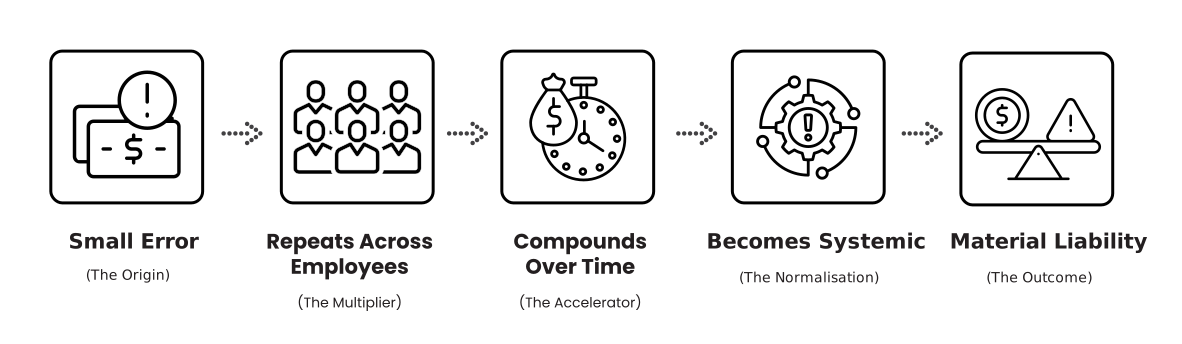
Manual workarounds don’t remain temporary — they embed themselves in process, becoming “how we’ve always done it” until a Fair Work audit reveals they were never correct.
And systems, while effective at applying rules, aren’t designed to validate whether those rules remain correct as conditions change.
The Hidden Cost of “Mostly Right”
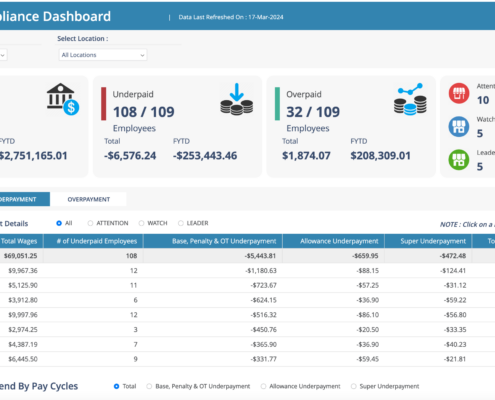
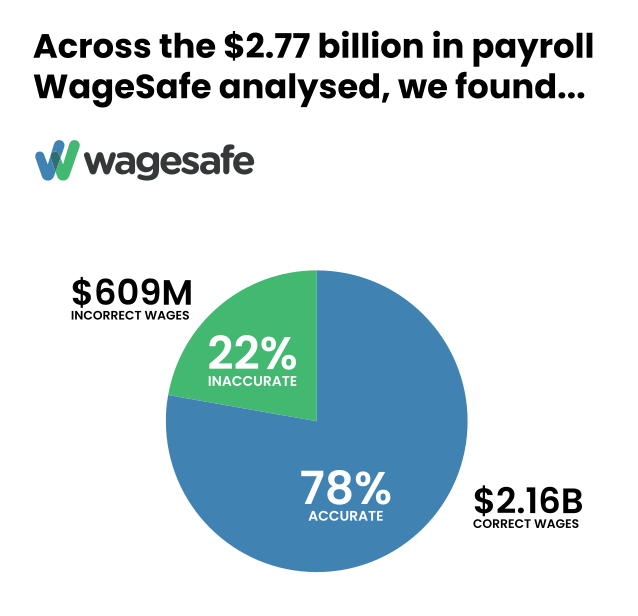 Across $2.77 billion in payroll analysed, over 22% of total payroll value contained discrepancies.
That figure isn’t about isolated mistakes.
It reflects cumulative variance across pay cycles, employees, and pay components.
More importantly, it highlights something most organisations underestimate:
Payroll doesn’t have to be “broken” to be wrong.
It can run on time.
It can reconcile financially.
It can pass surface-level checks.
And still drift.
What This Means Going Forward
The growth from 260,000 to over 500,000 payroll audits isn’t just a reflection of demand. It reflects a broader shift in mindset.
Organisations are recognising that:
- Compliance isn’t a point-in-time outcome
- Risk doesn’t sit still between audits
- Confidence without visibility is fragile
“Compliance isn’t a point-in-time outcome. Risk doesn’t sit still between audits. Confidence without visibility is fragile.”
As workforce complexity increases — across awards, enterprise agreements, and working patterns — this gap between assumption and reality will only widen.
The Evidence Question
This shift raises questions every organisation will need to answer:
- What compliance evidence would satisfy your board today?
- How many pay cycles run between your current validation points?
- If an employee or regulator asked for proof tomorrow, what would you show them?
The answers to these questions are reshaping how Australian enterprises approach wage governance.
And once you see that clearly, the question becomes unavoidable:
If you can’t prove compliance every pay cycle — what evidence are you relying on?
And more importantly: How long before assumption becomes liability?
Start the conversation about payroll confidence.
 https://wagesafe.com.au/wp-content/uploads/2026/05/New-Dashboard-for-blog-scaled.png
1211
2560
Barbara Smith
https://wagesafe.com.au/wp-content/uploads/2025/07/Wagesafe-Logo-Web-300x138.png
Barbara Smith2026-05-11 16:26:562026-05-15 12:47:02What 760,000 Payroll Audits Reveal About the Future of Wage Compliance
https://wagesafe.com.au/wp-content/uploads/2026/05/New-Dashboard-for-blog-scaled.png
1211
2560
Barbara Smith
https://wagesafe.com.au/wp-content/uploads/2025/07/Wagesafe-Logo-Web-300x138.png
Barbara Smith2026-05-11 16:26:562026-05-15 12:47:02What 760,000 Payroll Audits Reveal About the Future of Wage Compliance https://wagesafe.com.au/wp-content/uploads/2026/04/WS_hand-hold-pen-writing-document-businessman-using-computer-laptop-working-technology_website.jpg
376
500
Barbara Smith
https://wagesafe.com.au/wp-content/uploads/2025/07/Wagesafe-Logo-Web-300x138.png
Barbara Smith2026-04-28 14:23:392026-04-28 15:25:00Wage Compliance Impacts for CFOs and Finance Executives
https://wagesafe.com.au/wp-content/uploads/2026/04/WS_hand-hold-pen-writing-document-businessman-using-computer-laptop-working-technology_website.jpg
376
500
Barbara Smith
https://wagesafe.com.au/wp-content/uploads/2025/07/Wagesafe-Logo-Web-300x138.png
Barbara Smith2026-04-28 14:23:392026-04-28 15:25:00Wage Compliance Impacts for CFOs and Finance Executives https://wagesafe.com.au/wp-content/uploads/2026/03/WageSafe-WageSafe-White-Paper-The-Illusion-of-Payroll-Comfort.jpg
376
500
Barbara Smith
https://wagesafe.com.au/wp-content/uploads/2025/07/Wagesafe-Logo-Web-300x138.png
Barbara Smith2026-03-17 10:28:552026-04-28 15:26:39The Illusion of Payroll Comfort – Why Traditional Audits Fail Directors and the Strategic Imperative of Continuous Wage Compliance
https://wagesafe.com.au/wp-content/uploads/2026/03/WageSafe-WageSafe-White-Paper-The-Illusion-of-Payroll-Comfort.jpg
376
500
Barbara Smith
https://wagesafe.com.au/wp-content/uploads/2025/07/Wagesafe-Logo-Web-300x138.png
Barbara Smith2026-03-17 10:28:552026-04-28 15:26:39The Illusion of Payroll Comfort – Why Traditional Audits Fail Directors and the Strategic Imperative of Continuous Wage Compliance https://wagesafe.com.au/wp-content/uploads/2026/01/WageSafe-Continuous-Payroll-Compliance-.jpg
376
500
Barbara Smith
https://wagesafe.com.au/wp-content/uploads/2025/07/Wagesafe-Logo-Web-300x138.png
Barbara Smith2026-01-30 15:04:102026-03-24 13:52:31Why Continuous Payroll Compliance Is Replacing the “Annual Audit” Approach for Australian Enterprises
https://wagesafe.com.au/wp-content/uploads/2026/01/WageSafe-Continuous-Payroll-Compliance-.jpg
376
500
Barbara Smith
https://wagesafe.com.au/wp-content/uploads/2025/07/Wagesafe-Logo-Web-300x138.png
Barbara Smith2026-01-30 15:04:102026-03-24 13:52:31Why Continuous Payroll Compliance Is Replacing the “Annual Audit” Approach for Australian Enterprises https://wagesafe.com.au/wp-content/uploads/2025/12/WageSafe-Understanding-Wage-Underpayments-and-Director-Liability-in-Australia.jpg
376
500
Barbara Smith
https://wagesafe.com.au/wp-content/uploads/2025/07/Wagesafe-Logo-Web-300x138.png
Barbara Smith2025-12-09 13:17:412026-03-17 16:11:04Understanding Wage Underpayments and Director Liability in Australia
https://wagesafe.com.au/wp-content/uploads/2025/12/WageSafe-Understanding-Wage-Underpayments-and-Director-Liability-in-Australia.jpg
376
500
Barbara Smith
https://wagesafe.com.au/wp-content/uploads/2025/07/Wagesafe-Logo-Web-300x138.png
Barbara Smith2025-12-09 13:17:412026-03-17 16:11:04Understanding Wage Underpayments and Director Liability in Australia https://wagesafe.com.au/wp-content/uploads/2025/10/WageSafe-6-Reasons-Payroll-and-Compliance-Reviews-Are-Essential-for-Australian-Businesses.jpg
376
500
Barbara Smith
https://wagesafe.com.au/wp-content/uploads/2025/07/Wagesafe-Logo-Web-300x138.png
Barbara Smith2025-10-15 13:38:242026-03-17 16:15:536 Reasons Payroll and Compliance Reviews Are Essential for Australian Businesses
https://wagesafe.com.au/wp-content/uploads/2025/10/WageSafe-6-Reasons-Payroll-and-Compliance-Reviews-Are-Essential-for-Australian-Businesses.jpg
376
500
Barbara Smith
https://wagesafe.com.au/wp-content/uploads/2025/07/Wagesafe-Logo-Web-300x138.png
Barbara Smith2025-10-15 13:38:242026-03-17 16:15:536 Reasons Payroll and Compliance Reviews Are Essential for Australian Businesses https://wagesafe.com.au/wp-content/uploads/2025/09/group-business-colleagues-having-headache-while-working-laptop-trying-solve-problems-meeting.jpg
376
500
Barbara Smith
https://wagesafe.com.au/wp-content/uploads/2025/07/Wagesafe-Logo-Web-300x138.png
Barbara Smith2025-09-16 05:51:322026-03-17 16:17:31Why Payroll Compliance is now a Top Tier concern for Risk and Compliance leaders
https://wagesafe.com.au/wp-content/uploads/2025/09/group-business-colleagues-having-headache-while-working-laptop-trying-solve-problems-meeting.jpg
376
500
Barbara Smith
https://wagesafe.com.au/wp-content/uploads/2025/07/Wagesafe-Logo-Web-300x138.png
Barbara Smith2025-09-16 05:51:322026-03-17 16:17:31Why Payroll Compliance is now a Top Tier concern for Risk and Compliance leaders https://wagesafe.com.au/wp-content/uploads/2025/07/WageSafes-Real-Time-Independent-Wage-Compliance-.jpg
376
500
Barbara Smith
https://wagesafe.com.au/wp-content/uploads/2025/07/Wagesafe-Logo-Web-300x138.png
Barbara Smith2025-09-10 11:13:522026-03-17 16:19:21WageSafe’s Real-Time, Independent Wage Compliance vs. Annual BOOT Tests
https://wagesafe.com.au/wp-content/uploads/2025/07/WageSafes-Real-Time-Independent-Wage-Compliance-.jpg
376
500
Barbara Smith
https://wagesafe.com.au/wp-content/uploads/2025/07/Wagesafe-Logo-Web-300x138.png
Barbara Smith2025-09-10 11:13:522026-03-17 16:19:21WageSafe’s Real-Time, Independent Wage Compliance vs. Annual BOOT Tests https://wagesafe.com.au/wp-content/uploads/2025/07/The-Price-of-non-compliance.jpg
376
500
Barbara Smith
https://wagesafe.com.au/wp-content/uploads/2025/07/Wagesafe-Logo-Web-300x138.png
Barbara Smith2025-08-06 09:40:212026-03-17 16:22:39The price of non-compliance
https://wagesafe.com.au/wp-content/uploads/2025/07/The-Price-of-non-compliance.jpg
376
500
Barbara Smith
https://wagesafe.com.au/wp-content/uploads/2025/07/Wagesafe-Logo-Web-300x138.png
Barbara Smith2025-08-06 09:40:212026-03-17 16:22:39The price of non-compliance https://wagesafe.com.au/wp-content/uploads/2025/07/The-Road-Ahead-In-Payroll-Analysing-the-APA-2024-Survey-Results.jpg
376
500
Barbara Smith
https://wagesafe.com.au/wp-content/uploads/2025/07/Wagesafe-Logo-Web-300x138.png
Barbara Smith2025-07-08 09:32:212026-03-17 16:25:00The Road Ahead In Payroll: Analysing the APA 2024 Survey Results
https://wagesafe.com.au/wp-content/uploads/2025/07/The-Road-Ahead-In-Payroll-Analysing-the-APA-2024-Survey-Results.jpg
376
500
Barbara Smith
https://wagesafe.com.au/wp-content/uploads/2025/07/Wagesafe-Logo-Web-300x138.png
Barbara Smith2025-07-08 09:32:212026-03-17 16:25:00The Road Ahead In Payroll: Analysing the APA 2024 Survey Results