
What is Wage Compliance in Australia?
3 minute read
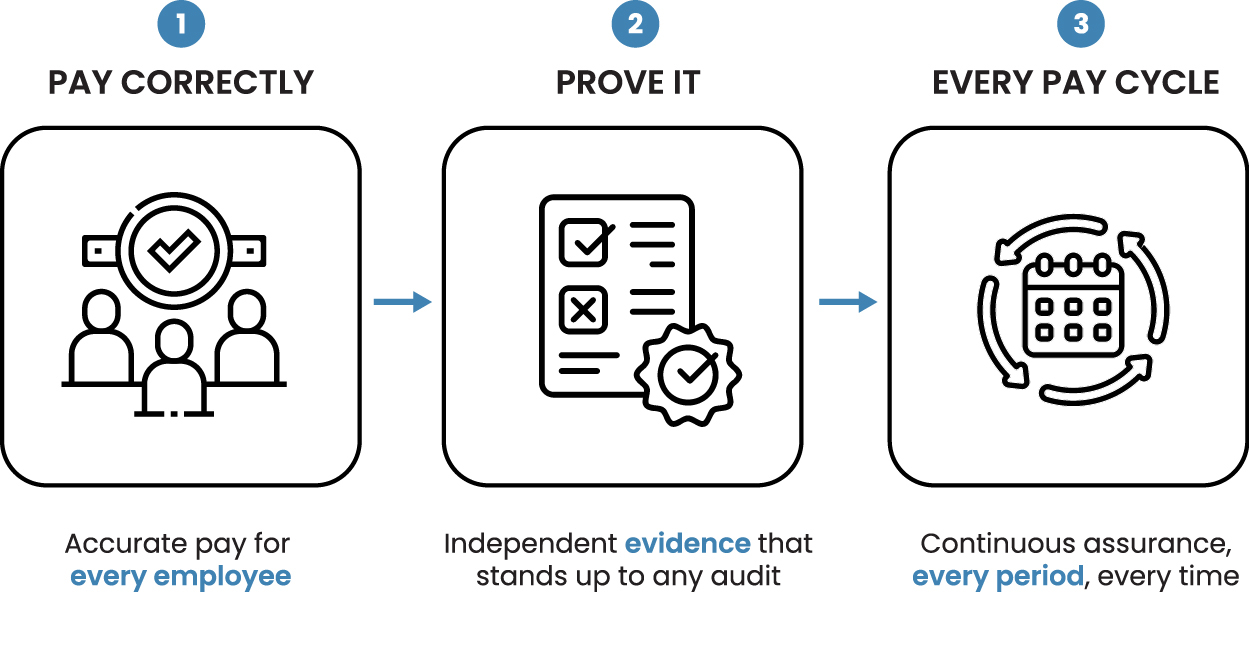
Wage compliance in Australia is the process of ensuring employees receive all legal pay entitlements under Australian workplace laws, including wages, overtime, penalty rates, allowances, leave entitlements, and superannuation.
Employers must comply with obligations set out under:
- The Fair Work Act 2009
- Modern Awards
- Enterprise Agreements
- The National Employment Standards (NES)
- Employment contracts
- Superannuation legislation
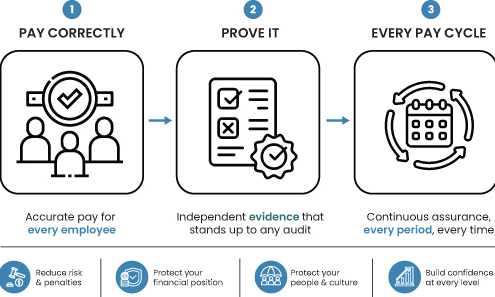
In simple terms, wage compliance is about paying employees correctly and being able to demonstrate that those payments are accurate.
Why wage compliance matters
Wage compliance is not simply a payroll responsibility. It is a governance, financial, legal, and reputational issue.
When businesses get wage compliance wrong, the consequences can include:
- Employee underpayments
- Back-pay liabilities
- Regulatory investigations
- Financial penalties
- Reputational damage
- Loss of employee trust
For many organisations, the greatest risk is not a single payroll mistake. It is a small error that goes unnoticed and repeats across hundreds or thousands of employees over an extended period.
What does wage compliance include?
Wage compliance covers a broad range of employee entitlements and obligations.
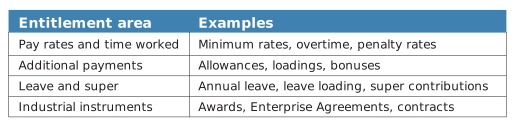
If any of these components are calculated incorrectly, a business may be exposed to underpayment or overpayment risk.
What are the most common wage compliance risks?
Many wage compliance issues do not arise because organisations intentionally underpay employees. They typically occur because payroll environments are complex and constantly changing.
Common Wage Compliance Risks
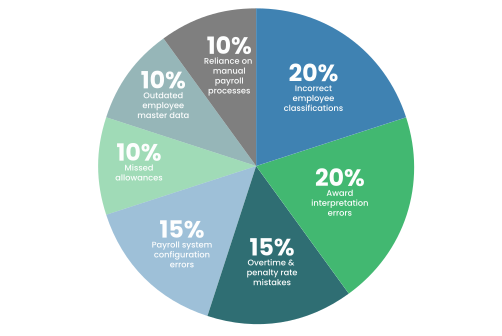
These risks often emerge gradually and can remain undetected for years before being identified through audits, employee complaints, or regulatory reviews.
Why is wage compliance difficult in Australia?
Australia has one of the world’s most complex industrial relations systems.
Many employers must navigate:
- Modern Awards
- Enterprise Agreements
- Annual wage increases
- Employee-specific conditions
- Shift work arrangements
- Allowances and penalty rates
- Changing workplace legislation
The challenge is that payroll systems can process payments exactly as configured, while still producing outcomes that do not align with legal entitlements.
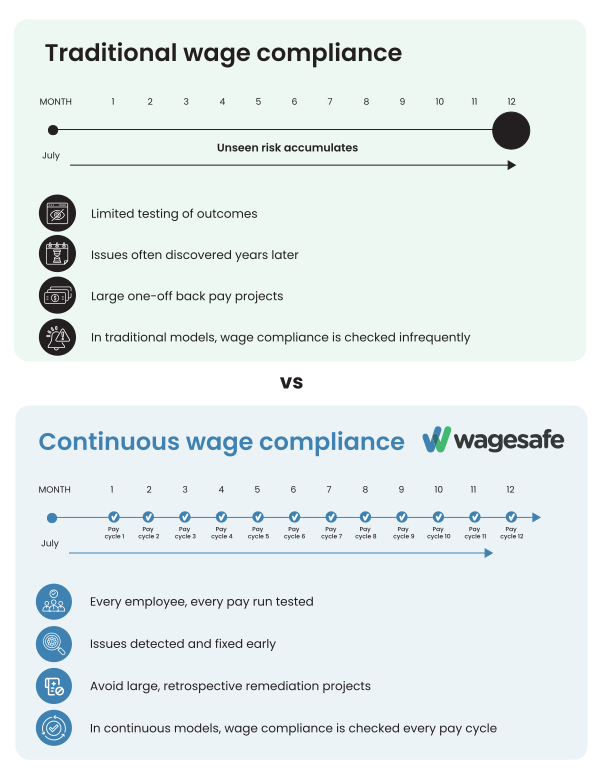
This means wage compliance cannot rely solely on payroll processing. It requires ongoing validation that pay outcomes match workplace obligations.
What is continuous wage compliance?
Traditionally, many organisations have relied on periodic payroll audits or annual reviews to assess compliance.
Continuous wage compliance takes a different approach.
Continuous wage compliance involves monitoring payroll outcomes on an ongoing basis, often every pay cycle, to identify potential issues before they become significant liabilities.
Rather than discovering errors months or years later, organisations can identify and address discrepancies as they occur.
As wage compliance expectations continue to increase, many large Australian employers are moving from retrospective reviews towards continuous compliance monitoring and assurance.
How businesses stay wage compliant
A strong wage compliance framework typically includes:
- Accurate award and agreement interpretation
- Well-maintained payroll systems
- Reliable employee and workforce data
- Documented payroll processes
- Regular compliance reviews
- Independent validation and assurance
- Timely remediation of identified issues
Leading organisations increasingly view compliance as a continuous process rather than a periodic exercise.
Learn more about wage compliance
You may also find these resources helpful:
- The 5-Question Leadership Blind Spot Test
- What 760,000 Payroll Audits Reveal About the Future of Wage Compliance
- Wage Compliance Impacts for CFOs and Finance Executives
Final word
Wage compliance is the discipline of paying employees lawfully, accurately, and consistently. For Australian employers, it is one of the clearest ways to protect the business, support employee trust, and build confidence in payroll.
 https://wagesafe.com.au/wp-content/uploads/2026/06/What-is-wage-compliance-graphic-copy.jpg
297
500
Barbara Smith
https://wagesafe.com.au/wp-content/uploads/2025/07/Wagesafe-Logo-Web-300x138.png
Barbara Smith2026-06-18 16:55:432026-06-22 15:22:10What is Wage Compliance in Australia?
https://wagesafe.com.au/wp-content/uploads/2026/06/What-is-wage-compliance-graphic-copy.jpg
297
500
Barbara Smith
https://wagesafe.com.au/wp-content/uploads/2025/07/Wagesafe-Logo-Web-300x138.png
Barbara Smith2026-06-18 16:55:432026-06-22 15:22:10What is Wage Compliance in Australia?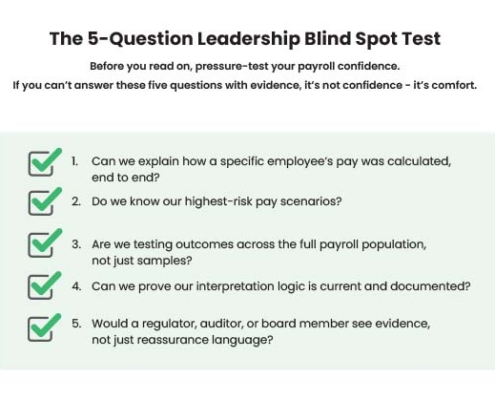 https://wagesafe.com.au/wp-content/uploads/2026/05/5-Questions-Graphic.jpg
419
595
Barbara Smith
https://wagesafe.com.au/wp-content/uploads/2025/07/Wagesafe-Logo-Web-300x138.png
Barbara Smith2026-05-28 17:04:592026-06-01 08:49:36The Real Problem Isn’t Effort. It’s Proof.
https://wagesafe.com.au/wp-content/uploads/2026/05/5-Questions-Graphic.jpg
419
595
Barbara Smith
https://wagesafe.com.au/wp-content/uploads/2025/07/Wagesafe-Logo-Web-300x138.png
Barbara Smith2026-05-28 17:04:592026-06-01 08:49:36The Real Problem Isn’t Effort. It’s Proof.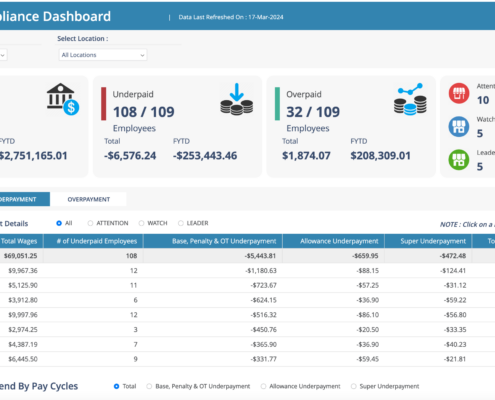 https://wagesafe.com.au/wp-content/uploads/2026/05/New-Dashboard-for-blog-scaled.png
1211
2560
Barbara Smith
https://wagesafe.com.au/wp-content/uploads/2025/07/Wagesafe-Logo-Web-300x138.png
Barbara Smith2026-05-11 16:26:562026-05-28 16:47:56What 760,000 Payroll Audits Reveal About the Future of Wage Compliance
https://wagesafe.com.au/wp-content/uploads/2026/05/New-Dashboard-for-blog-scaled.png
1211
2560
Barbara Smith
https://wagesafe.com.au/wp-content/uploads/2025/07/Wagesafe-Logo-Web-300x138.png
Barbara Smith2026-05-11 16:26:562026-05-28 16:47:56What 760,000 Payroll Audits Reveal About the Future of Wage Compliance https://wagesafe.com.au/wp-content/uploads/2026/04/WS_hand-hold-pen-writing-document-businessman-using-computer-laptop-working-technology_website.jpg
376
500
Barbara Smith
https://wagesafe.com.au/wp-content/uploads/2025/07/Wagesafe-Logo-Web-300x138.png
Barbara Smith2026-04-28 14:23:392026-04-28 15:25:00Wage Compliance Impacts for CFOs and Finance Executives
https://wagesafe.com.au/wp-content/uploads/2026/04/WS_hand-hold-pen-writing-document-businessman-using-computer-laptop-working-technology_website.jpg
376
500
Barbara Smith
https://wagesafe.com.au/wp-content/uploads/2025/07/Wagesafe-Logo-Web-300x138.png
Barbara Smith2026-04-28 14:23:392026-04-28 15:25:00Wage Compliance Impacts for CFOs and Finance Executives https://wagesafe.com.au/wp-content/uploads/2026/03/WageSafe-WageSafe-White-Paper-The-Illusion-of-Payroll-Comfort.jpg
376
500
Barbara Smith
https://wagesafe.com.au/wp-content/uploads/2025/07/Wagesafe-Logo-Web-300x138.png
Barbara Smith2026-03-17 10:28:552026-04-28 15:26:39The Illusion of Payroll Comfort – Why Traditional Audits Fail Directors and the Strategic Imperative of Continuous Wage Compliance
https://wagesafe.com.au/wp-content/uploads/2026/03/WageSafe-WageSafe-White-Paper-The-Illusion-of-Payroll-Comfort.jpg
376
500
Barbara Smith
https://wagesafe.com.au/wp-content/uploads/2025/07/Wagesafe-Logo-Web-300x138.png
Barbara Smith2026-03-17 10:28:552026-04-28 15:26:39The Illusion of Payroll Comfort – Why Traditional Audits Fail Directors and the Strategic Imperative of Continuous Wage Compliance https://wagesafe.com.au/wp-content/uploads/2026/01/WageSafe-Continuous-Payroll-Compliance-.jpg
376
500
Barbara Smith
https://wagesafe.com.au/wp-content/uploads/2025/07/Wagesafe-Logo-Web-300x138.png
Barbara Smith2026-01-30 15:04:102026-03-24 13:52:31Why Continuous Payroll Compliance Is Replacing the “Annual Audit” Approach for Australian Enterprises
https://wagesafe.com.au/wp-content/uploads/2026/01/WageSafe-Continuous-Payroll-Compliance-.jpg
376
500
Barbara Smith
https://wagesafe.com.au/wp-content/uploads/2025/07/Wagesafe-Logo-Web-300x138.png
Barbara Smith2026-01-30 15:04:102026-03-24 13:52:31Why Continuous Payroll Compliance Is Replacing the “Annual Audit” Approach for Australian Enterprises https://wagesafe.com.au/wp-content/uploads/2025/12/WageSafe-Understanding-Wage-Underpayments-and-Director-Liability-in-Australia.jpg
376
500
Barbara Smith
https://wagesafe.com.au/wp-content/uploads/2025/07/Wagesafe-Logo-Web-300x138.png
Barbara Smith2025-12-09 13:17:412026-03-17 16:11:04Understanding Wage Underpayments and Director Liability in Australia
https://wagesafe.com.au/wp-content/uploads/2025/12/WageSafe-Understanding-Wage-Underpayments-and-Director-Liability-in-Australia.jpg
376
500
Barbara Smith
https://wagesafe.com.au/wp-content/uploads/2025/07/Wagesafe-Logo-Web-300x138.png
Barbara Smith2025-12-09 13:17:412026-03-17 16:11:04Understanding Wage Underpayments and Director Liability in Australia https://wagesafe.com.au/wp-content/uploads/2025/10/WageSafe-6-Reasons-Payroll-and-Compliance-Reviews-Are-Essential-for-Australian-Businesses.jpg
376
500
Barbara Smith
https://wagesafe.com.au/wp-content/uploads/2025/07/Wagesafe-Logo-Web-300x138.png
Barbara Smith2025-10-15 13:38:242026-03-17 16:15:536 Reasons Payroll and Compliance Reviews Are Essential for Australian Businesses
https://wagesafe.com.au/wp-content/uploads/2025/10/WageSafe-6-Reasons-Payroll-and-Compliance-Reviews-Are-Essential-for-Australian-Businesses.jpg
376
500
Barbara Smith
https://wagesafe.com.au/wp-content/uploads/2025/07/Wagesafe-Logo-Web-300x138.png
Barbara Smith2025-10-15 13:38:242026-03-17 16:15:536 Reasons Payroll and Compliance Reviews Are Essential for Australian Businesses https://wagesafe.com.au/wp-content/uploads/2025/09/group-business-colleagues-having-headache-while-working-laptop-trying-solve-problems-meeting.jpg
376
500
Barbara Smith
https://wagesafe.com.au/wp-content/uploads/2025/07/Wagesafe-Logo-Web-300x138.png
Barbara Smith2025-09-16 05:51:322026-03-17 16:17:31Why Payroll Compliance is now a Top Tier concern for Risk and Compliance leaders
https://wagesafe.com.au/wp-content/uploads/2025/09/group-business-colleagues-having-headache-while-working-laptop-trying-solve-problems-meeting.jpg
376
500
Barbara Smith
https://wagesafe.com.au/wp-content/uploads/2025/07/Wagesafe-Logo-Web-300x138.png
Barbara Smith2025-09-16 05:51:322026-03-17 16:17:31Why Payroll Compliance is now a Top Tier concern for Risk and Compliance leaders https://wagesafe.com.au/wp-content/uploads/2025/07/WageSafes-Real-Time-Independent-Wage-Compliance-.jpg
376
500
Barbara Smith
https://wagesafe.com.au/wp-content/uploads/2025/07/Wagesafe-Logo-Web-300x138.png
Barbara Smith2025-09-10 11:13:522026-03-17 16:19:21WageSafe’s Real-Time, Independent Wage Compliance vs. Annual BOOT Tests
https://wagesafe.com.au/wp-content/uploads/2025/07/WageSafes-Real-Time-Independent-Wage-Compliance-.jpg
376
500
Barbara Smith
https://wagesafe.com.au/wp-content/uploads/2025/07/Wagesafe-Logo-Web-300x138.png
Barbara Smith2025-09-10 11:13:522026-03-17 16:19:21WageSafe’s Real-Time, Independent Wage Compliance vs. Annual BOOT Tests https://wagesafe.com.au/wp-content/uploads/2025/07/The-Price-of-non-compliance.jpg
376
500
Barbara Smith
https://wagesafe.com.au/wp-content/uploads/2025/07/Wagesafe-Logo-Web-300x138.png
Barbara Smith2025-08-06 09:40:212026-03-17 16:22:39The price of non-compliance
https://wagesafe.com.au/wp-content/uploads/2025/07/The-Price-of-non-compliance.jpg
376
500
Barbara Smith
https://wagesafe.com.au/wp-content/uploads/2025/07/Wagesafe-Logo-Web-300x138.png
Barbara Smith2025-08-06 09:40:212026-03-17 16:22:39The price of non-compliance https://wagesafe.com.au/wp-content/uploads/2025/07/The-Road-Ahead-In-Payroll-Analysing-the-APA-2024-Survey-Results.jpg
376
500
Barbara Smith
https://wagesafe.com.au/wp-content/uploads/2025/07/Wagesafe-Logo-Web-300x138.png
Barbara Smith2025-07-08 09:32:212026-03-17 16:25:00The Road Ahead In Payroll: Analysing the APA 2024 Survey Results
https://wagesafe.com.au/wp-content/uploads/2025/07/The-Road-Ahead-In-Payroll-Analysing-the-APA-2024-Survey-Results.jpg
376
500
Barbara Smith
https://wagesafe.com.au/wp-content/uploads/2025/07/Wagesafe-Logo-Web-300x138.png
Barbara Smith2025-07-08 09:32:212026-03-17 16:25:00The Road Ahead In Payroll: Analysing the APA 2024 Survey Results